How to Create Artwork That Brands Actually Want to License
How to Create Artwork That Brands Actually Want to License
The shift from making pretty patterns to building licensing-ready collections
If you've been creating art for a while, painting, designing, experimenting with surface pattern and you still can't figure out why your work isn't getting picked up by brands, this post is for you.
It's not about talent. It's not about your style. It's about one specific shift in how you think about your work. And once you make it, everything starts to move.
Why So Many Artists Stay Stuck
Here's what I see over and over: artists who are genuinely talented, consistently showing up, creating beautiful work and still struggling to land licensing deals.
They're doing everything right on the surface. They're building their portfolio, sharing their work online, maybe even reaching out to brands. But something isn't connecting.
The reason, almost every time? They're creating artwork. But brands need solutions.
That's not a small distinction. It's everything.
What Brands Are Actually Looking For
Most artists stop after finishing a pattern. They create something beautiful, add it to their portfolio and wait.
But brands aren't just looking for patterns they're looking for artwork that's ready to use and that speaks directly to their customers.
Think about what a brand actually needs when they license artwork. They need to be able to picture it on a product. They need it to fit within a collection. They need it to feel like it was made for their audience not just made to be admired.
When your work checks those boxes, licensing becomes a much shorter conversation.
The One Question That Changes Everything
Before you finish your next design, pause and ask yourself three things:
Where would this live? A greeting card? A fabric line? A home décor collection? Packaging?
What products could this become?
Think beyond the obvious. A pattern that works on a tote bag might also work on wallpaper, wrapping paper, or a notebook cover. Does this feel like part of a complete line? A single hero pattern is a starting point. A cohesive collection is a pitch.
These questions shift your mindset from making art to building something useful. And useful is what gets licensed.
How to Build a Licensing-Ready Collection
You don't need dozens of patterns to get started. A strong, focused mini collection is far more powerful than a large portfolio of disconnected work.
Here's what a solid collection looks like:
1-2 hero patterns
This is your statement piece, the design that anchors the collection and sets the tone. It should be strong, versatile, and immediately communicable as a theme.
2–4 coordinate patterns
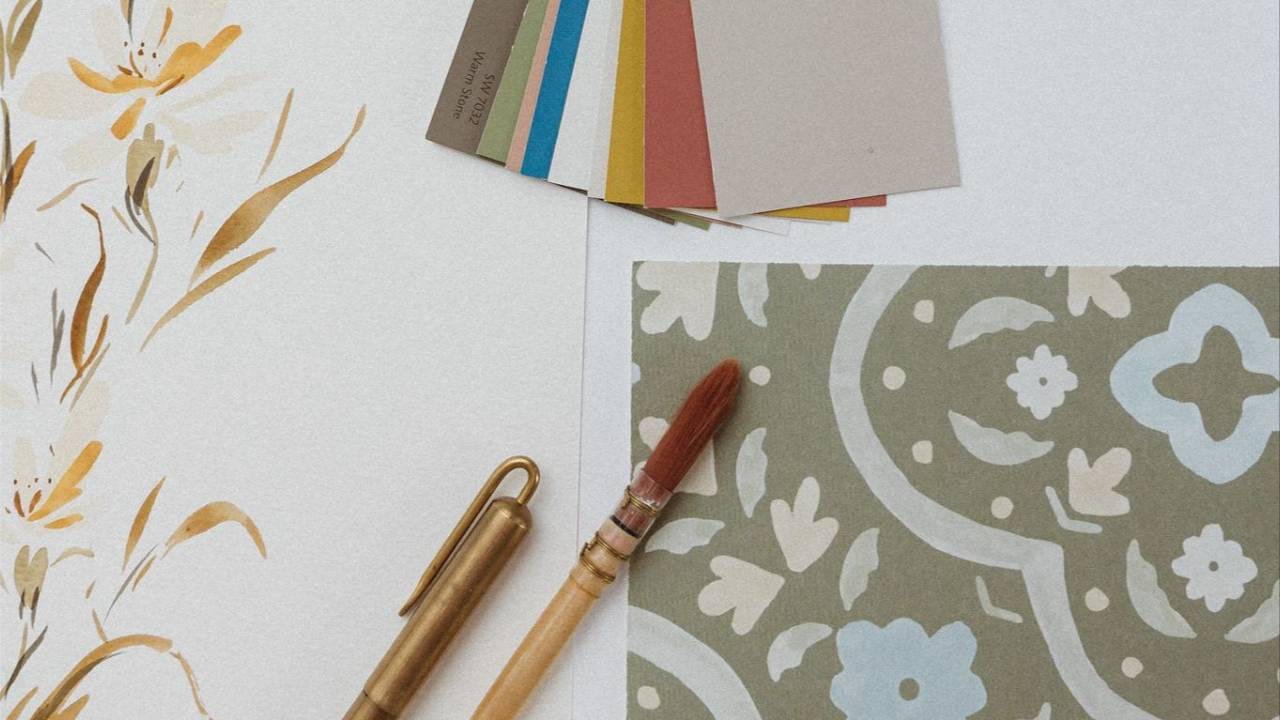
These support the hero without competing with it. Think of them as the patterns that would live alongside the hero on a product line, a smaller-scale version, a geometric complement, a tonal repeat.
2–4 blender patterns
Simple, subtle, and often overlooked. Blenders give brands the flexibility to mix and match without visual chaos. They're the quiet workhorses of a great collection.
1 spot illustration (with and without lettering)
This is the piece most artists skip and it's one of the most valuable things you can add to your collection.
A spot illustration opens doors. It expands your reach into stationery, gift, packaging, and seasonal categories that wouldn't work with repeat patterns alone. It gives your collection flexibility, and flexibility multiplies your opportunities.
Why Completeness Is Your Competitive Advantage
Here's the truth about licensing: brands are busy. They're working with tight timelines and limited bandwidth. When they find a collection they love, the easier you make it for them to say yes, the faster they move.
A complete, cohesive collection tells a brand: this is ready. You don't have to do the work of imagining how it fits together it already does.
That's the difference between artwork that gets bookmarked and artwork that gets licensed.
When your work feels complete:
Brands can move faster through the decision-making process
Your collection communicates more value at first glance
You open the door to larger, multi-product opportunities
This is what separates hobby-level work from licensing-ready work. Not talent. Not years of experience. Clarity and intention.
A Simple Way to Move Forward This Week
You don't need to overhaul your entire portfolio. Just pick one of these:
Finish one mini collection using the structure above
Take an existing pattern and build a full collection around it
Add a spot illustration to a collection you've already created
Small, intentional steps build real momentum. You're closer than you think. You don't need more ideas, you need a clearer path.
Ready to Build Collections That Actually Connect?
If this resonated with you, I created a free Collections Guide that walks you through exactly how to build collections that connect with brands and turn into real licensing opportunities. Grab it by joining Studio Notes below.
Whether you're just starting out or you have a portfolio full of work that isn't quite landing yet, this guide will help you move forward with confidence.
The work you're making matters and the right brands are out there waiting for it.

p.s. Want weekly encouragement, creative tips and resources like a custom monthly mockups? Join Studio Notes Here🤎
Let's stay connected!
join Studio Notes for latest news, inspiration and resources